How 3D Planning Improves Dental Implant Outcomes
How 3D Planning Improves Dental Implant Outcomes
Dental implant treatment has evolved significantly over the past decade. One of the most important advances improving accuracy, safety, and long-term success is 3D implant planning. By using advanced digital technology, clinicians can plan implant placement with greater precision than previously possible.
At Dental Implants & Aesthetics, 3D planning plays a central role in our implant workflow, helping deliver predictable outcomes, improved comfort, and restorations designed to last.
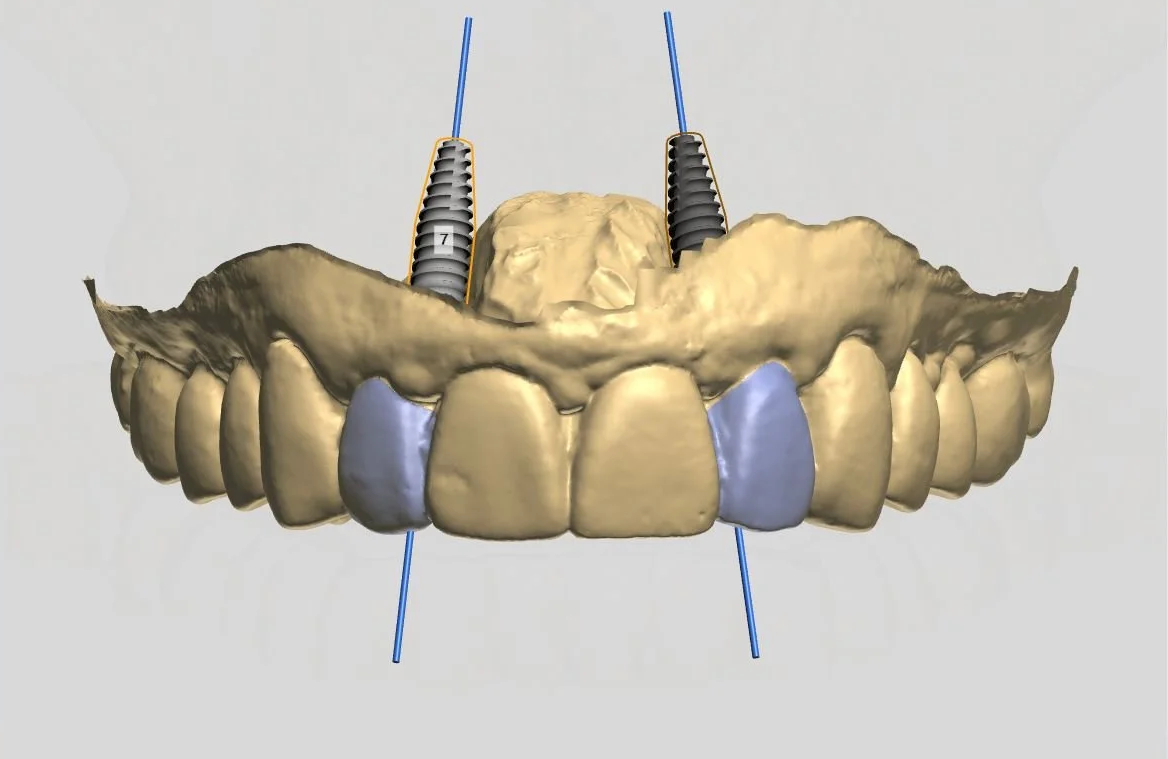
What Is 3D Dental Implant Planning?
3D implant planning is a digital process that uses cone-beam computed tomography (CBCT) scans and specialised planning software to create a three-dimensional model of a patient’s jawbone, teeth, nerves, and surrounding structures.
Unlike traditional two-dimensional X-rays, 3D imaging allows clinicians to:
-
Accurately assess bone volume and density
-
Visualise anatomical structures such as nerves and sinuses
-
Plan implant placement in precise positions
-
Design restorations before surgery begins
This technology enables a prosthetically driven approach, meaning implants are placed based on the ideal final tooth position, not just available bone.
Why 3D Planning Matters for Dental Implants
Dental implants rely on proper positioning to function properly and remain stable over the long term. Even minor deviations in angle or depth can affect aesthetics, bite function, hygiene access, and implant longevity.
3D planning improves outcomes by allowing the entire treatment to be carefully planned before surgery, reducing uncertainty and enhancing predictability.
Improved Accuracy and Precision
One of the key advantages of 3D planning is millimetre-level accuracy. Using digital planning software, clinicians can determine:
-
Optimal implant size and length
-
Ideal angulation and depth
-
Safe distances from nerves and sinuses
This level of precision helps minimise surgical risk and supports optimal integration of the implant with the surrounding bone.
Safer Implant Placement
3D imaging allows clinicians to identify critical anatomical structures, including:
-
Inferior alveolar nerve
-
Maxillary sinuses
-
Adjacent tooth roots
By visualising these structures before surgery, implant placement can be planned to avoid complications such as nerve injury or sinus involvement. This contributes to a safer, more controlled surgical experience.
Prosthetically Driven Treatment Planning
Successful implant treatment is not just about placing an implant — it is about restoring function, comfort, and aesthetics.
With 3D planning, implants are positioned based on the final restoration, whether that is a crown, bridge, or full-arch solution. This ensures:
-
Proper bite alignment
-
Natural-looking tooth proportions
-
Improved speech and chewing function
-
Easier long-term cleaning and maintenance
This approach is particularly important for complex cases such as full-arch restorations and All-on-X treatment.
Reduced Surgical Time and Improved Efficiency
Because the surgical plan is established in advance, implant placement is often more efficient. In many cases, 3D planning enables the creation of custom surgical guides that accurately transfer the digital plan to the mouth.
Benefits may include:
-
Shorter surgical appointments
-
Reduced tissue trauma
-
Improved patient comfort
-
Faster recovery times
Better Outcomes for Complex Cases
3D planning is especially valuable for patients with:
-
Limited bone volume
-
Previous tooth loss or bone resorption
-
Multiple missing teeth
-
Full-arch implant needs
By visualising bone quality and anatomy in detail, clinicians can determine whether additional procedures such as bone grafting are required and plan accordingly.
Supporting Immediate Load and Same-Day Teeth
For selected patients, 3D planning supports immediate-load implant treatment, allowing a temporary restoration to be placed shortly after surgery.
Precise planning helps ensure implants are positioned to achieve sufficient stability, which is essential for supporting early function and aesthetics in immediate restoration cases.
Improved Long-Term Implant Success
Correct implant positioning is critical to long-term success. Well-planned implants are easier to clean, distribute bite forces more evenly, and reduce stress on surrounding bone and tissues.
This may lower the risk of complications such as:
-
Peri-implantitis
-
Bone loss
-
Prosthetic wear or failure
Ongoing maintenance remains essential, but 3D planning establishes a strong foundation for longevity.
Patient Communication and Education
3D planning also enhances patient understanding. Digital scans and simulations allow patients to visualise:
-
Their bone structure
-
Planned implant position
-
Expected restorative outcomes
This helps patients make informed decisions and better understand their treatment plan.
3D Implant Planning at Dental Implants & Aesthetics
At Dental Implants & Aesthetics, 3D planning is an integral part of our implant workflow. Our clinicians use advanced imaging and digital planning tools to tailor treatment to each individual, with a focus on accuracy, safety, and long-term success.
By combining digital planning with clinical expertise, we aim to deliver implant solutions that restore function, comfort, and confidence.
3D implant planning has transformed the way dental implants are placed. By improving accuracy, safety, and predictability, it plays a vital role in achieving successful, long-lasting outcomes.
If you are considering dental implants and would like to learn how advanced planning technology may support your treatment, our team is here to guide you through every step of the process.
Published: Monday, 3rd February, 2026
Recent Posts

Composite Veneers vs Porcelain

Affordable Dental Implants Gold Coast