Bridge vs Implant
Bridge vs Implant: Which Is Right for a Missing Tooth?
Losing a single tooth can affect more than the appearance of your smile. Depending on where the tooth was located, a missing tooth may also influence chewing function, speech and the way your remaining teeth come together.
Fortunately, there are several ways to replace a missing tooth. Two commonly considered options are a dental bridge and a dental implant.
While both can be used to replace a missing tooth, they work in very different ways. A dental bridge uses neighbouring teeth to support a replacement tooth, while a dental implant replaces the missing tooth root with an implant placed into the jawbone.
So, when comparing bridge vs implant, which option is right for you?
There isn’t one answer that applies to every patient. The appropriate treatment depends on your oral health, the condition of the surrounding teeth and gums, available bone, functional requirements and individual treatment goals.
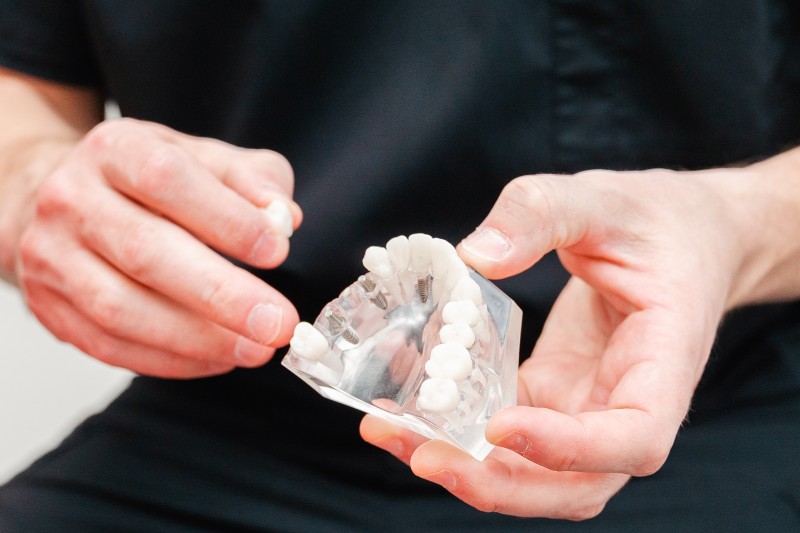
What Is a Dental Bridge?
A dental bridge is a fixed restoration designed to replace one or more missing teeth.
For a conventional dental bridge, the replacement tooth is supported by crowns placed over the teeth on either side of the gap. These supporting teeth are known as abutment teeth.
A bridge can provide a fixed solution without requiring an implant to be surgically placed into the jawbone.
Depending on the location of the missing tooth and the condition of the surrounding teeth, different types of bridges may be considered.
Advantages of a dental bridge include:
- It can replace a missing tooth without implant surgery
- Treatment can generally be completed in fewer stages
- It can restore chewing function
- It provides a fixed alternative to a removable denture
- It may be suitable where the neighbouring teeth already require crowns or significant restoration
However, a conventional bridge generally requires preparation of the adjacent supporting teeth. Whether this is appropriate depends on their existing condition and the overall treatment plan.
What Is a Dental Implant?
A dental implant is a small titanium fixture surgically placed into the jawbone to replace the root of a missing tooth.
Once the implant has integrated with the surrounding bone, it can support an individual crown designed to replace the visible portion of the missing tooth.
A typical single-tooth implant restoration consists of:
Implant → Abutment → Crown
Unlike a conventional bridge, the adjacent teeth do not need to provide structural support for the replacement tooth.
Dental implants can therefore provide an independent tooth replacement solution while also replacing the missing tooth root.
Bridge vs Implant: What’s the Difference?
While both treatments can replace a missing tooth, there are several important differences.
| Dental Bridge | Dental Implant | |
|---|---|---|
| How it is supported | Supported by neighbouring teeth | Supported by an implant in the jawbone |
| Surgery | Usually no implant surgery | Requires surgical implant placement |
| Adjacent teeth | Usually prepared to support the bridge | Generally left independent of the restoration |
| Bone replacement | Does not replace the missing tooth root | Replaces the function of the tooth root |
| Treatment stages | Generally fewer stages | Usually involves surgical and restorative stages |
| Healing | No implant integration period | Requires time for implant integration |
| Maintenance | Requires cleaning around and beneath the bridge | Requires ongoing implant and gum maintenance |
Neither option is automatically appropriate for every patient. A clinical assessment is necessary before deciding which approach is suitable.
Does a Dental Implant Look More Natural Than a Bridge?
Both bridges and implant-supported crowns can be designed to closely resemble natural teeth. The appearance of the final restoration depends on factors including:
- Tooth position
- Gum levels
- Available space
- Restoration material
- Shape and colour of neighbouring teeth
- Bite and function
- Quality of the surrounding tissues
For a single missing tooth, an implant-supported crown can be individually designed to sit within the existing dentition without relying on neighbouring teeth for support.
However, a well-designed dental bridge can also provide an aesthetic and functional replacement for a missing tooth.
Your clinician can discuss the expected aesthetic considerations of each option during treatment planning.
Dental Implant vs Bridge: What About the Surrounding Teeth?
A major consideration when choosing between a bridge and an implant is the condition of the neighbouring teeth. With a conventional dental bridge, adjacent teeth support the replacement tooth and are generally prepared to receive crowns.
This may be appropriate when the neighbouring teeth are already heavily restored, have large fillings, or require crowns for other clinical reasons.
If the neighbouring teeth are healthy and structurally sound, an implant-supported crown may be discussed as an alternative because the replacement tooth can be supported independently.
This is one reason a comprehensive assessment is important before deciding between a bridge and implant.
What Happens to the Bone After a Tooth Is Lost?
When a natural tooth is lost, the jawbone surrounding the tooth root is no longer stimulated in the same way.
Over time, some degree of bone remodelling and resorption can occur.
A dental implant is placed into the jawbone and functions as an artificial tooth root. This means implant treatment can provide support within the bone where the natural tooth root was previously located.
However, the suitability of an implant depends on the available bone and the health of the surrounding gums and tissues.
In some cases, additional procedures such as bone grafting may be recommended before or during implant treatment.
Which Treatment Takes Longer?
Treatment timelines differ between bridges and implants. A conventional dental bridge can often be completed over a relatively short series of appointments.
Dental implant treatment generally involves more stages because the implant needs to integrate with the surrounding bone before the final restoration is completed.
A typical implant journey may include:
- Comprehensive consultation
- Diagnostic imaging and treatment planning
- Implant placement
- Healing and osseointegration
- Abutment and crown restoration
- Ongoing maintenance
The actual timeline depends on the individual patient. Additional procedures such as tooth extraction, bone grafting or gum treatment can also affect treatment duration.
What If I Don’t Have Enough Bone for an Implant?
Insufficient bone does not necessarily mean that dental implants are impossible. Following tooth loss, bone volume can reduce over time. If there isn’t sufficient bone to support an implant in the desired position, your clinician may discuss bone grafting or another approach to create an appropriate foundation.
In some cases, the available bone and clinical circumstances may mean that a bridge or another tooth replacement option is more appropriate.
A CBCT scan can provide detailed three-dimensional information about the jawbone and surrounding anatomical structures, helping your clinician assess the feasibility of implant treatment.
Which Option Has Better Longevity?
Both dental bridges and implants can provide long-term tooth replacement when appropriately planned, placed and maintained.
However, longevity is influenced by many factors, including:
- Oral hygiene
- Gum health
- Bite forces
- Smoking
- General health
- The condition of the supporting teeth
- Quality of the restoration
- Regular professional maintenance
Dental implants are not immune to complications. The tissues around an implant can develop inflammation and periodontal-like conditions, including peri-implant disease.
Likewise, bridges require ongoing care around the supporting teeth and underneath the restoration.
Regular dental examinations and professional maintenance are important regardless of which treatment you choose.
What About the Cost of a Bridge vs Implant?
Cost is another important consideration when comparing a dental bridge vs implant. The total cost depends on the complexity of your treatment and the materials and procedures involved.
A dental implant may have a higher initial treatment cost because it involves surgical placement, the implant components and a custom-made crown.
A bridge may involve a lower initial investment, although this depends on the type of bridge and the condition of the supporting teeth.
When comparing costs, it is important to consider the complete treatment plan, rather than comparing the price of an implant with the price of a bridge in isolation.
Additional procedures, laboratory work, temporary restorations and future maintenance may all contribute to the overall cost.
At Dental Implants & Aesthetics, your treatment plan and associated fees are discussed following a comprehensive assessment.
How Do You Choose Between a Bridge and Implant?
Your dentist or implant clinician will consider several factors when assessing your options.
These may include:
The health of neighbouring teeth
If the teeth next to the gap are healthy, preserving them without using them as bridge supports may be an important consideration.
Gum health
Healthy gums and supporting tissues are important for both bridges and dental implants.
Bone availability
An implant requires sufficient bone for placement and stability. Imaging can help assess the available bone.
Bite and function
Your bite, chewing forces and the position of the missing tooth can influence which restoration is appropriate.
Aesthetic requirements
For teeth visible when smiling, factors such as gum position, tooth proportions, colour and symmetry may be particularly important.
Personal preference
Treatment involves more than clinical considerations. Your preferred treatment timeline, willingness to undergo surgery, maintenance requirements and financial considerations can all form part of the discussion.
Can a Missing Tooth Be Left Untreated?
It may be tempting to leave a missing tooth, particularly if it isn’t causing immediate discomfort.
However, depending on its location and your individual circumstances, tooth loss can contribute to changes in chewing function, tooth movement and bite relationships.
The consequences vary between patients, which is why an assessment is recommended even if the missing tooth isn’t currently causing problems.
Your dentist can discuss whether replacement is recommended and what options may be appropriate.
Frequently Asked Questions
Is an implant better than a bridge?
Neither treatment is universally better. A dental implant and dental bridge have different indications, benefits and considerations. The appropriate option depends on your oral health, surrounding teeth, bone, gums, functional requirements and preferences.
Is a bridge cheaper than a dental implant?
The cost varies depending on the treatment required. A bridge may have a lower initial treatment cost in some circumstances, while implant treatment involves additional surgical and restorative components. A personalised treatment plan is required to determine the total cost.
Does getting a dental implant hurt?
Implant placement is performed under local anaesthetic, with sedation options available for suitable patients. Some discomfort, swelling or tenderness can occur following surgery. Your clinician will provide specific post-operative instructions.
How long does a dental implant last?
Implants can provide long-term tooth replacement, but they require ongoing care and maintenance. Implant longevity varies between individuals and can be influenced by factors such as gum health, oral hygiene, bite forces and general health.
Can I get an implant straight after a tooth is removed?
In some cases, an implant may be placed at the same appointment as tooth removal. This is known as immediate implant placement. However, it isn’t suitable for every patient, and factors such as infection, bone volume and soft tissue condition need to be assessed.
Considering Your Options for a Missing Tooth?
At Dental Implants & Aesthetics, treatment planning begins with a comprehensive assessment of your oral health, existing teeth, gums, bone and bite. Whether you’re considering a single dental implant, dental bridge or another form of tooth replacement, the first step is understanding your individual circumstances.
The most important step is understanding why a particular treatment has been recommended and what the alternatives may involve. If you’re unsure whether a dental bridge or implant is right for you, a consultation can help you understand your options.
At Dental Implants & Aesthetics, we’ll assess your individual circumstances, discuss the available treatment approaches and explain what each option involves.
Book a consultation to discuss your missing tooth and explore your treatment options.
Published: Monday, 31st August, 2026
Recent Posts

Bridge vs Implant

Composite Veneers vs Porcelain